Free Apps Aren't Free: The Billion-Dollar Market Built on Your Personal Data
Download a free app, get a free service. Sounds like a fair trade, right? Not quite. The moment you tap "Install," you've entered into an agreement that most people never fully read — one where your personal data becomes the product, packaged, sold, and resold across a shadowy marketplace that operates entirely out of sight.
This isn't a conspiracy theory. It's just business. And understanding how it works is the first step to taking back a little control over your digital life.
What's Actually Being Collected
Most people assume apps collect the obvious stuff — your name, email, maybe your location if you let them. But the reality goes a lot further than that.
Modern apps are capable of harvesting an astonishing range of data points: your precise GPS coordinates throughout the day, which other apps you use and for how long, your device's unique identifiers, your browsing history within the app, your contact list, your Wi-Fi network names, your battery level (yes, really), and even behavioral patterns like how fast you scroll or which parts of a screen you tap most often.
That last category — behavioral data — is increasingly valuable. It's not just about what you do; it's about how you do it. Advertisers and data brokers can infer things like your income bracket, your political leanings, your health concerns, and your emotional state from behavioral patterns alone. A 2023 study from Duke University's Sanford School of Public Policy found that data brokers in the US were openly selling detailed profiles on Americans — including sensitive categories like mental health history and financial stress indicators — with very little regulatory friction.
What Your Data Is Actually Worth
Here's where things get surprisingly concrete. Data brokers — companies like Acxiom, Oracle Data Cloud, and hundreds of smaller players — buy, aggregate, and resell consumer profiles. According to industry estimates, a single detailed consumer profile in the US can sell for anywhere between $0.50 and $25, depending on how rich the data is and who's buying it.
That might not sound like much, but multiply it by hundreds of millions of profiles, updated constantly, and you're looking at a global data broker market valued at over $300 billion annually. Apps are one of the primary pipelines feeding that machine.
Free gaming apps, utility tools, and even some health and fitness apps frequently include third-party SDKs (software development kits) from ad networks and analytics companies. These SDKs are essentially tiny data-collection programs embedded inside the app you downloaded. You interact with the game; the SDK quietly reports back to its home server. The app developer gets a cut of the ad revenue. The data broker gets your profile. The advertiser gets a targeted audience. Everyone wins — except you.
The Middlemen You've Never Heard Of
Between the app on your phone and the ad that mysteriously matches something you thought about buying last Tuesday, there's an entire ecosystem of intermediaries most users never encounter.
Demand-side platforms, supply-side platforms, data management platforms, ad exchanges — these are the infrastructure of what's called programmatic advertising. In the time it takes a webpage or app to load, your profile is auctioned off in real time to the highest bidder. This process, called real-time bidding (RTB), happens in milliseconds and involves your data being broadcast to potentially hundreds of companies simultaneously, even if only one wins the auction.
The Electronic Frontier Foundation has flagged RTB as one of the most privacy-invasive systems ever built at scale — and it runs quietly inside apps you use every single day.
Why US Consumers Are Particularly Exposed
Americans are in a tougher spot than users in many other parts of the world when it comes to data protection. The European Union's GDPR gives EU residents broad rights over their data — the right to access it, correct it, and delete it. The US has no equivalent federal law.
What we do have is a patchwork: California's CPRA gives California residents some meaningful rights, and a handful of other states like Colorado, Virginia, and Texas have passed their own versions. But if you're living in a state without specific privacy legislation, your legal protections are pretty thin.
This gap is exactly why the free app economy has flourished so aggressively in the American market. The regulatory environment makes it relatively easy to collect, share, and monetize user data without meaningful consequences.
Practical Ways to Push Back
None of this means you have to delete every free app on your phone and go live off the grid. But there are real, practical steps you can take to reduce your exposure.
Audit your app list regularly. Go through your phone every couple of months and delete apps you haven't used recently. An app you forgot about is still potentially collecting data in the background.
Use your platform's privacy tools. Both iOS and Android have improved their privacy dashboards significantly. On iPhone, check Settings > Privacy & Security > App Privacy Report to see which apps are accessing your data and how often. Android users can find similar controls under Settings > Privacy > Privacy Dashboard.
Limit ad tracking. On iOS, go to Settings > Privacy & Security > Tracking and make sure "Allow Apps to Request to Track" is turned off. On Android, head to Settings > Privacy > Ads and opt out of personalized advertising.
Be skeptical of free utility apps. Flashlight apps, QR code scanners, weather tools — these are notorious for bundling aggressive data collection SDKs. Many of the functions these apps provide are now built directly into your phone's operating system. Use those instead.
Check app privacy labels. Both the App Store and Google Play now show privacy nutrition labels for apps. Before downloading, scroll down to the "App Privacy" or "Data Safety" section. If an app collects a wide range of data for tracking purposes, that's a red flag worth taking seriously.
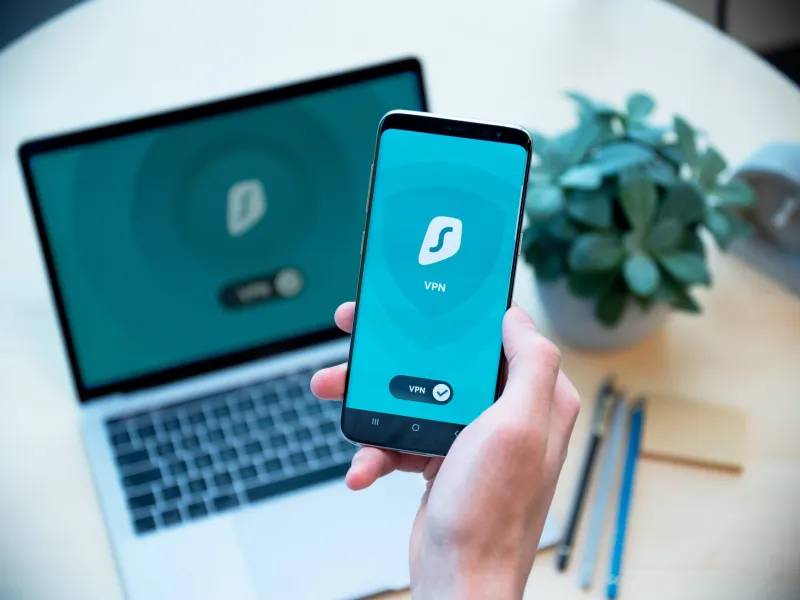
Consider a VPN for sensitive browsing. A reputable VPN won't stop apps from collecting data, but it does mask your IP address, which is one of the key identifiers used to link your activity across different apps and services.
The Bottom Line
The free app economy isn't going anywhere — and honestly, it has delivered a lot of genuinely useful tools that most people couldn't afford if they had to pay full price. But "free" has always meant something specific in this context: you're trading access for data, whether you realize it or not.
Knowing what that trade actually looks like — and roughly what it's worth — puts you in a much better position to decide which trades are worth making. Your digital footprint is real, it has real monetary value, and you have more control over it than the app economy would prefer you to know.