That $600 Screen Replacement? It Wasn't an Accident — It Was a Strategy
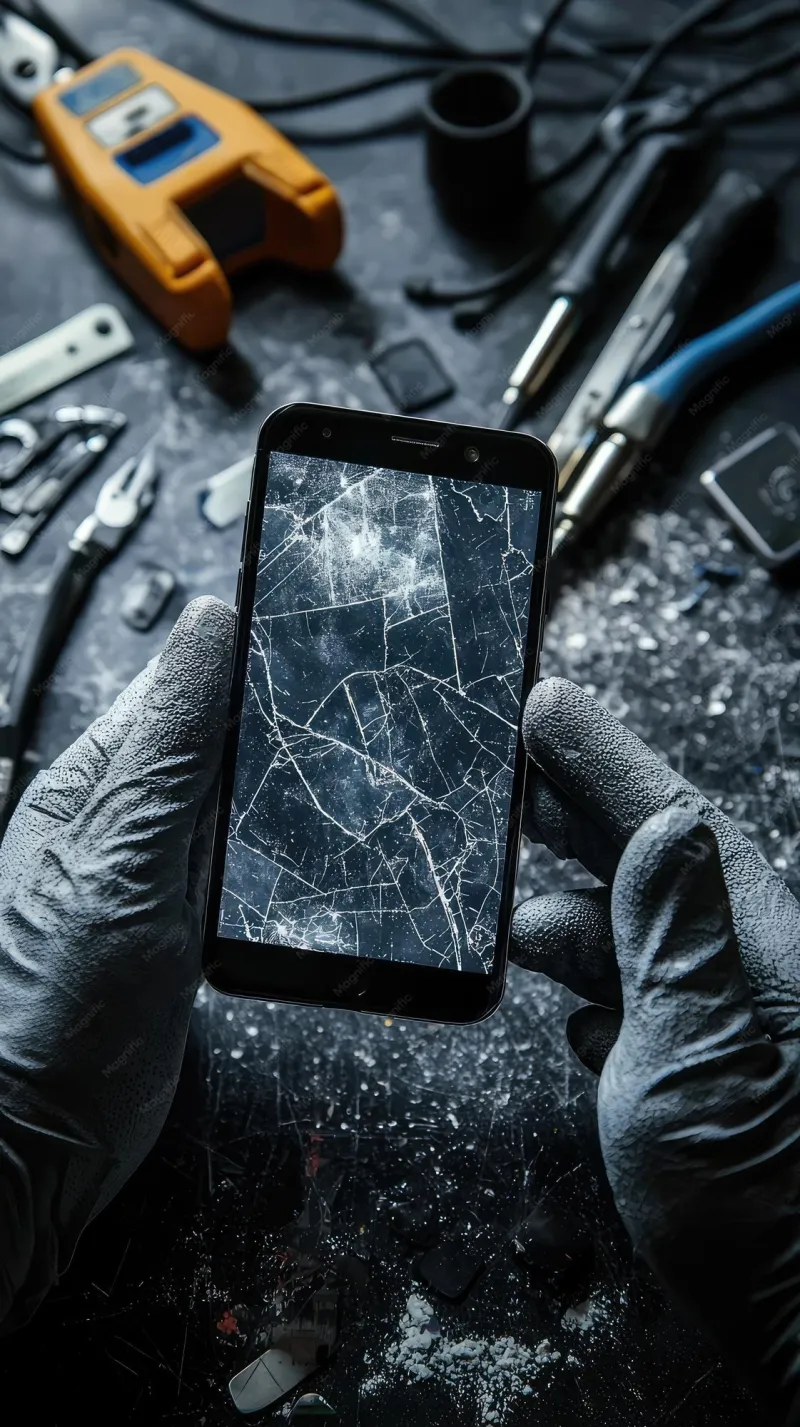
Photo: smartphone repair technician replacing cracked screen at workbench, via img.freepik.com
You cracked your iPhone screen. You head to the Apple Store expecting a straightforward fix, and the quote comes back: $349. For a part that costs a fraction of that online. Meanwhile, your friend with a five-year-old Pixel gets their screen replaced at an independent shop for $120, no questions asked.
That difference isn't luck. It's design.
Why a Simple Fix Became So Expensive
For most of the last decade, smartphone manufacturers have made it progressively harder to repair their own devices — not through locks and screws alone, but through software. The technique is called parts pairing. Here's how it works: critical components like screens, batteries, and cameras are assigned a unique serial number that's registered to your specific device. Swap in a perfectly good replacement part, and the phone may refuse to enable certain features. On some iPhones, a third-party screen swap disables True Tone. On others, an unofficial battery triggers a persistent warning banner. Face ID is famously tied to the original sensor assembly.
The official line is safety and security — batteries can be dangerous, biometric data needs protecting. And there's real merit to that argument. But the practical effect is that many repairs become impossible outside the manufacturer's network, where prices are set with no competition.
It's the same logic that made printer ink a goldmine: control the consumable, control the customer.
The States Fighting Back
The pushback has been slow but steady. Massachusetts kicked things off with automotive right-to-repair rules back in 2012, but the smartphone wave is more recent. New York's Digital Fair Repair Act took effect in late 2023, requiring manufacturers to make tools, parts, and documentation available to consumers and independent shops. Minnesota followed. California passed its own version in 2023, and Oregon went a step further — becoming the first state to explicitly ban parts pairing on new devices.
That Oregon provision matters most. Requiring access to parts is one thing; requiring that parts actually work when installed by anyone else is what genuinely breaks the monopoly.
Colorado, meanwhile, passed legislation covering wheelchairs and farm equipment before turning to consumer electronics — a reminder that this fight started in hospitals and cornfields, not phone stores.
Some Manufacturers Are Quietly Changing Course
Here's the twist nobody expected: some of the biggest names are now competing on repairability.
Apple launched its Self Service Repair program in 2022, selling genuine parts and renting official toolkits to regular people. More importantly, Apple now supports used genuine parts — meaning a donor phone's screen can legally and functionally live on in yours. That was unthinkable a few years ago.
Google and Samsung both partner with iFixit to sell official repair kits with teardown guides. Samsung's program covers everything from batteries to charging ports on Galaxy devices.
Fairphone and HMD (the makers of Nokia-branded phones) have built entire marketing strategies around user-replaceable everything — including a Fairphone you can swap the battery out of in seconds, no tools required.
Why the change of heart? Regulation is one reason. But so is consumer sentiment: repairability now sells. iFixit's repairability scores show up in reviews, and a phone that can be fixed cheaply lasts longer — which increasingly appeals to buyers tired of $1,000 devices that feel obsolete after two years.
When Repairing Beats Upgrading
So your phone broke. Should you fix it or upgrade? A quick framework:
Repair makes sense when:
- The fix costs less than about 40% of what a comparable new phone would run you
- Your phone still gets security updates (check the manufacturer's support window — modern Pixels and iPhones get 5–7 years)
- It's a screen, battery, or charging port — cheap parts, high impact
Upgrading makes sense when:
- The repair estimate approaches half the cost of a new device
- Your phone has lost OS support and no longer receives security patches — that's a genuine privacy risk, not just an inconvenience
- The failure is a motherboard-level issue, where labor costs spiral
One more tip: before paying retail at the manufacturer's counter, price the same repair at a reputable independent shop. With the new laws forcing parts availability, independents can now do more than ever — and often for half the price.
The Bigger Picture
Right to repair isn't really about cracked screens. It's about ownership. When the device in your pocket refuses to accept a part you paid for, the question stops being technical and becomes philosophical: do you own your phone, or does it belong to the company that made it?
State legislatures across the country have started answering that question. And for once, the answer seems to be trending toward you.