Fold It, Roll It, Stack It: The Wild Future of Smartphone Design Is Closer Than You Think
There's a certain irony in the fact that the most powerful computer most Americans own looks almost identical to the one they had in 2015. Sure, the cameras are better. The chips are faster. The bezels got thinner. But fundamentally, a smartphone in 2025 is still a glass-and-aluminum rectangle you stare at and occasionally drop on your face while lying in bed.
That might be about to change — and more dramatically than most people expect.
A new generation of hardware innovation is moving out of concept labs and into actual consumer products. Foldable displays, rollable screens, and modular designs are no longer science fiction. Some of them are already for sale. The question isn't really whether these form factors are coming — it's which ones will actually stick around long enough to matter, and how they'll reshape the way we use our phones every day.
Where We've Been: A Quick Lap Around the History
To understand where smartphone design is heading, it helps to appreciate just how weird the journey has already been.
The original Motorola Razr flip phone was, for a moment in the mid-2000s, the coolest object in America. Then the iPhone arrived in 2007 and obliterated the entire category almost overnight, establishing the touchscreen slab as the dominant form factor for the next two decades. Attempts to break out of that mold — remember the BlackBerry Passport? HTC's curved-back One series? The Essential Phone? — mostly failed to gain traction, not because the ideas were bad, but because the timing was off and the execution wasn't quite there.
Foldables represent the most serious challenge to the slab's dominance since the iPhone itself.
Foldables: From Gimmick to Genuine
When Samsung released the first Galaxy Fold in 2019, the reviews were... rough. Screens cracked. Hinges failed. Early reviewers broke their units within days. It felt like a $2,000 proof-of-concept rather than a real product.
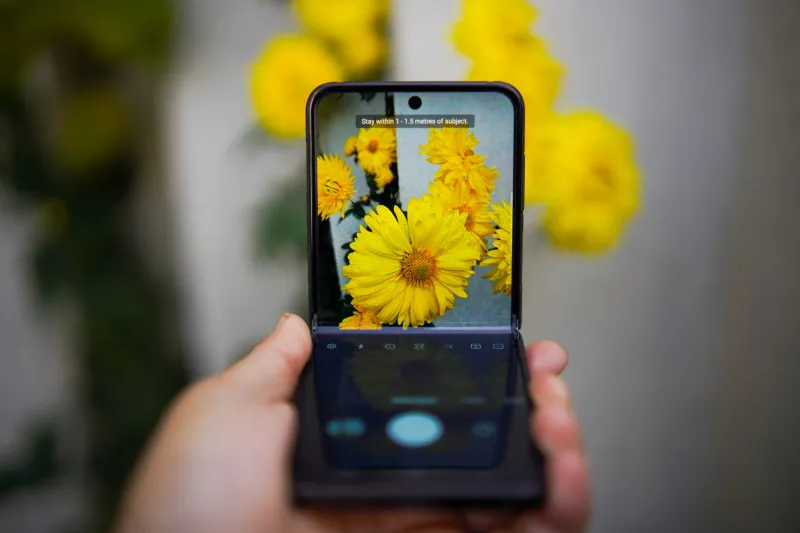
Five years later, the story is genuinely different. The Galaxy Z Fold 6 and Z Flip 6 are polished, durable devices that real people are buying and using daily. Google's Pixel 9 Pro Fold entered the market with serious credibility. Even OnePlus and Motorola have competitive foldable options at lower price points.
The core appeal is straightforward: you get a phone-sized device in your pocket that opens into a tablet-sized screen when you need it. For reading, watching video, multitasking with split-screen apps, or running productivity software on the go, the larger canvas is genuinely useful — not just flashy.
The remaining friction points are real but shrinking. Foldables are still heavier than comparable slab phones. The crease in the center of the display is visible under certain lighting conditions. And pricing, while coming down, still puts them out of reach for budget-conscious buyers. But the trajectory is clear: these devices are getting better faster than most analysts predicted.
Industry observers expect foldable smartphone shipments in the US to roughly double between 2024 and 2027 as prices continue to fall and more manufacturers enter the space. Apple, notably, has not yet released a foldable — but patents and supply chain reports suggest that's a matter of when, not if. The day Apple enters the foldable market will be the day mainstream American consumers fully take notice.
Rollable Screens: The Wildcard
If foldables feel like an evolution, rollables feel like something from a different timeline entirely.
The concept: a display that physically extends from the body of the device, expanding the screen size on demand and retracting when you're done. No hinge, no crease, no fold line. LG demoed a rollable phone — the LG Rollable — before the company exited the smartphone business in 2021. Oppo showed off a working prototype. TCL has teased concepts. Motorola has shown rollable designs at trade shows.
The technology is genuinely impressive. Flexible OLED panels have advanced to the point where rolling and unrolling a display thousands of times without degradation is achievable in a lab setting. The engineering challenge is packaging all of that into something durable enough for daily life in an American's back pocket.
Rollables face a steeper climb to mainstream adoption than foldables. There are no major rollable consumer products currently on the US market. The mechanical complexity introduces more potential failure points. And consumer education — helping people understand why they'd want this over a foldable — is a real hurdle.
That said, the form factor has a compelling argument: it solves the crease problem entirely, and it enables a more natural expansion of screen real estate than any fold can offer. Several hardware engineers working in the space suggest we could see the first serious rollable product from a major brand by 2026 or 2027.
Modular Phones: The Dream That Won't Quite Die
Project Ara, Google's ambitious modular phone initiative, was canceled in 2016 after years of development. The idea — a phone where you could swap out individual components like cameras, batteries, and processors — captured the imagination of tech enthusiasts everywhere and then quietly disappeared.
But the concept has never fully gone away. Fairphone, a European manufacturer with a growing US presence, has built a business around repairability and modular design. Their phones are designed to be disassembled with basic tools, with individual components sold separately for user replacement. It's not quite the hot-swap customization Ara promised, but it's a real, working product that people are buying.
The broader modular vision — where you upgrade your camera module when new sensor tech drops, or swap in a bigger battery for a road trip — faces significant challenges from both a supply chain and a software perspective. But as right-to-repair legislation gains momentum in the US, and as consumers become more conscious of electronic waste, the modular philosophy may find a larger audience than it has before.
What Will Actually Go Mainstream?
Here's an honest assessment, filtered through what American consumers have historically actually adopted versus what they've admired from a distance.
Foldables are the most likely to hit genuine mainstream numbers within the next three to five years, especially once Apple enters the category and prices drop below $800. The use case is clear, the technology is proven, and the form factor solves a real problem — screen size vs. portability — that millions of people feel every day.
Rollables are genuinely exciting but face a longer road. Expect them to be a premium niche product for several years before (or if) they find broader adoption.
Modular designs will likely remain a values-driven purchase — appealing to sustainability-conscious buyers and repair enthusiasts — rather than a mass-market phenomenon. Unless a major carrier or manufacturer decides to make repairability a flagship feature, it won't drive mainstream buying decisions.
How This Changes Daily Life
Beyond the hardware specs and the trade show demos, what do these shifts actually mean for how Americans use their phones?
A world where foldables are common is a world where the line between phone and tablet blurs further. Apps will need to adapt to variable screen sizes dynamically. The way we consume content — reading, streaming, working — on mobile devices will shift as more screen real estate becomes available in a pocketable form.
It also means the accessories market gets interesting again. Cases, screen protectors, and charging solutions will all need to reinvent themselves for a new generation of form factors.
And perhaps most importantly, it signals that the smartphone category — which many analysts have called "mature" and "stagnant" — has more reinvention left in it than the boring annual spec bump cycle might suggest.
Your next phone might fold in half, unroll like a scroll, or come apart in pieces. Whatever shape it takes, the rectangle's long reign at the top is finally starting to look a little less certain.