Sold a Lie: The Ugly Truth Behind Your Phone's Battery Life Claims
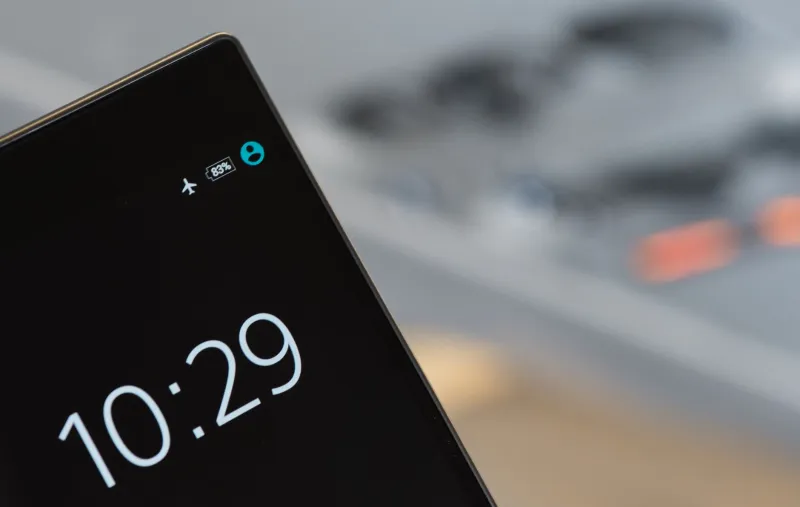
You bought the phone. You read the spec sheet. "Up to 22 hours of video playback" — that's what it said, right there in big confident print. And yet here you are, plugging in before dinner like it's a personal failure.
It isn't. The number on the box was never meant to describe your life. It was designed to win a comparison chart.
The Lab Doesn't Look Like Your Living Room
Every major smartphone manufacturer — Apple, Samsung, Google, you name it — tests battery life under conditions that would be unrecognizable to the average American user. We're talking about controlled brightness levels (usually somewhere around 50%, which is dimmer than most people actually run their screens), Wi-Fi only (no cellular signal fighting for attention), and loop tests that play the same video file over and over with no background apps, no notifications, and no location services pinging satellites.
That is not how you use your phone. Not even close.
Your phone is juggling a cellular connection that fluctuates depending on whether you're inside a concrete building or standing next to a tower. It's syncing email, refreshing social feeds, tracking your steps, and occasionally letting a half-dozen apps phone home to ad servers — all while you're technically "not using it." The gap between the lab and your back pocket is enormous, and manufacturers know it.
The FCC doesn't mandate a standardized real-world battery test. The industry largely self-regulates. Which means those headline numbers are legal, technically defensible, and almost completely useless to you as a consumer.
Background Activity Is the Real Battery Killer
Here's something most people never think about: a significant chunk of your battery disappears while your phone is just sitting on a table. Screen off. Apparently idle. Still draining.
This happens for a few reasons. Push notifications require your phone to maintain persistent connections to multiple servers. Location services — even when no app is visibly open — can trigger brief GPS or cell-tower lookups dozens of times per hour. "Background App Refresh" on iOS and equivalent processes on Android let apps silently update their content so everything looks fresh the moment you open it.
All of that costs power. Not a catastrophic amount per event, but it adds up across hundreds of micro-tasks every single day.
Some of this is genuinely useful. You probably want your maps app to know roughly where you are. You probably want your messaging apps to fetch new messages without you manually pulling to refresh. But a lot of it — the news apps refreshing stories you'll never read, the games checking for updates, the shopping apps pinging their servers — is pure overhead with zero benefit to you.
Throttling Isn't a Conspiracy — But It's Still Frustrating
Remember when Apple got caught slowing down older iPhones and had to pay $113 million in a multistate settlement? That situation revealed something the industry had quietly accepted for years: manufacturers build performance management algorithms into their software that intentionally reduce processor speed under certain battery conditions.
Apple called it a feature designed to prevent unexpected shutdowns. Critics called it a way to nudge people toward buying new phones. The truth is probably somewhere in the middle, but what's undeniable is this — your phone's software actively makes decisions about performance that you didn't authorize and probably weren't clearly told about.
Android manufacturers do versions of this too. Samsung's Game Optimizing Service controversy a couple of years back showed that performance throttling wasn't just an Apple thing. When your phone feels sluggish at 20% battery, that's often intentional behavior baked into the OS, not just a hardware limitation.
Settings That Actually Help (That Nobody Tells You About)
Okay, enough doom. There are real, practical things you can do to close the gap between spec-sheet fantasy and daily reality — and most of them don't involve buying a new phone.
Turn off 5G when you don't need it. This one's underused. 5G radios consume meaningfully more power than LTE, especially when your phone is constantly scanning for a 5G signal in areas with spotty coverage. If you're at home or in an office with solid Wi-Fi, switching your phone to LTE-only mode (buried in cellular settings on both iOS and Android) can add a noticeable chunk of life to your day.
Audit your location permissions ruthlessly. Go into your privacy settings and look at which apps have "Always On" location access. Most of them don't need it. Switching apps to "While Using" or disabling location entirely for apps that have no business knowing where you are is one of the highest-impact changes you can make.
Disable Background App Refresh selectively. On iPhone, this is under Settings > General. On Android, it varies by manufacturer but usually lives under Battery > Background Usage Limits or similar. You don't need to disable it for everything — keep it on for apps that genuinely benefit from it, like your email or calendar. Kill it for everything else.
Use Optimized Battery Charging. Both iOS and Android now offer charging algorithms that learn your habits and slow down the charge cycle during overnight charging to reduce battery wear. It's turned on by default on newer iPhones, but worth verifying. This won't help your daily drain, but it meaningfully extends the long-term health of your battery — which is the real longevity story.
Check your display refresh rate. Many modern Android phones default to 120Hz refresh rates, which look incredibly smooth but chew through battery. Dropping to 60Hz — or using an adaptive setting if your phone has one — can extend screen-on time noticeably. iPhone Pro models have ProMotion that handles this adaptively, but budget Android phones sometimes lock you into high refresh without a clear way to change it.
The Number on the Box Is Marketing. Your Habits Are Reality.
It's worth stepping back and acknowledging that battery life is genuinely hard to communicate in a single number. A phone used for streaming video on Wi-Fi will last dramatically longer than the same phone being used for navigation in a rural area with weak signal. Manufacturers aren't entirely wrong to use controlled lab tests — they just aren't honest about what those tests actually represent.
What you can do is stop benchmarking your experience against a number that was never meant to reflect it. Instead, focus on what you can control: the apps running silently in the background, the radios searching for signals you're not using, and the settings that your phone manufacturer buried three menus deep because they didn't particularly want you to find them.
Your phone is a genuinely impressive piece of technology. Its battery is a compromise between physics, cost, and industrial design. The spec sheet is a sales tool.
Knowing the difference is half the battle.